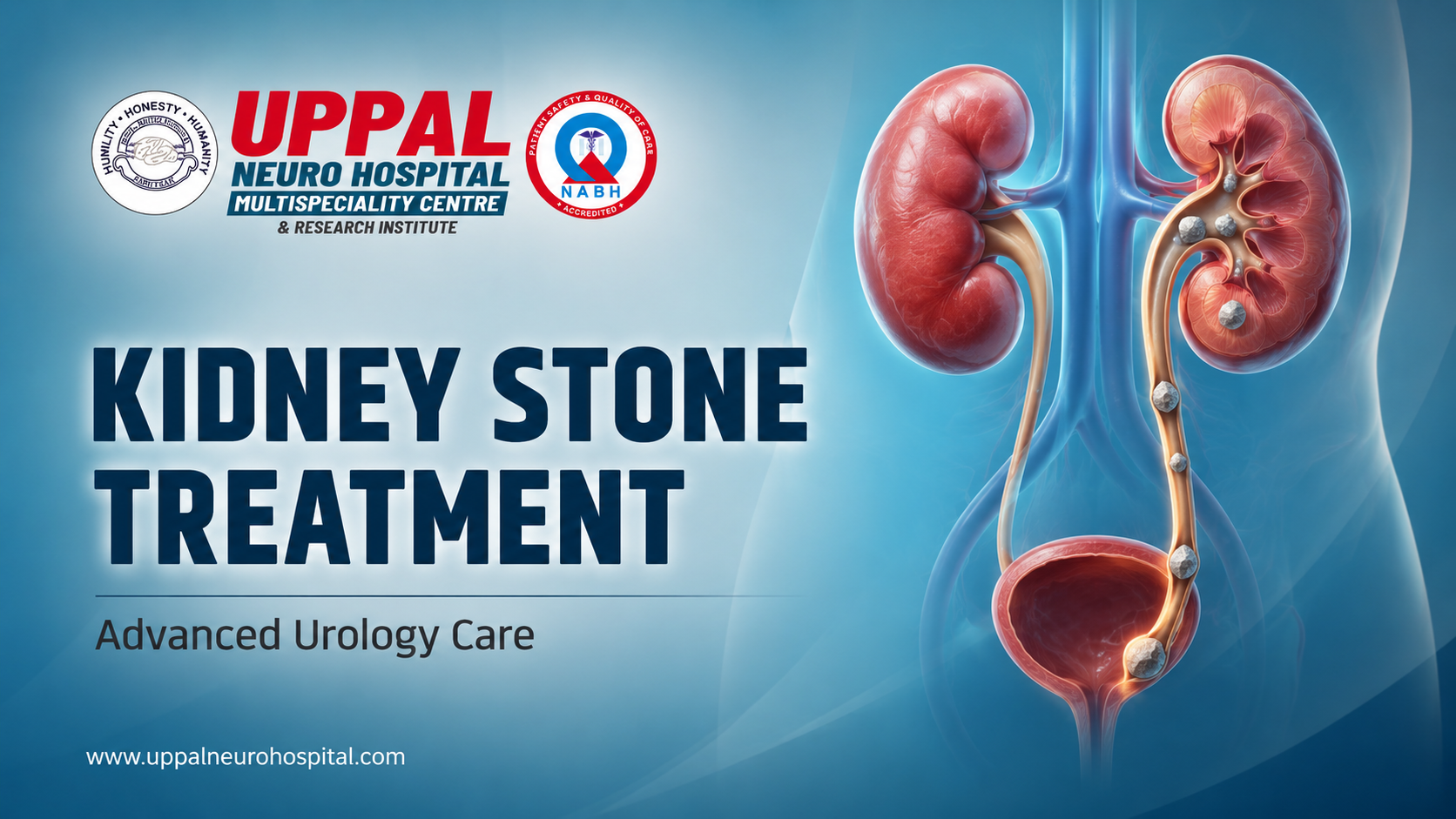
7 Signs You Should Not Ignore Kidney Stone Pain and Visit a Urologist in Amritsar
Kidney stones can cause severe pain, but pain intensity alone does not reveal the size of a stone or whether it is creating a serious complication.
Seeking timely kidney stone treatment in Amritsar becomes especially important when the pain is accompanied by fever, urinary difficulty, vomiting, or blood in the urine.
Some small stones pass without a procedure, while larger or obstructing stones may require urgent medical care. Knowing the warning signs can help you decide when home observation is no longer appropriate and when you should consult a qualified urologist.
What Does Kidney Stone Pain Feel Like?
Kidney stones are hard deposits that form from minerals and other substances in urine.
A stone may remain unnoticed while it is inside the kidney.
Symptoms commonly begin when it moves into the ureter—the tube carrying urine from the kidney to the bladder—or interferes with normal urine flow.
Typical kidney stone pain may:
- Begin in the side or back below the ribs
- Feel sharp, intense, or cramping
- Come and go in waves
- Move towards the lower abdomen or groin
- Change in location as the stone travels
- Occur with nausea, urinary urgency, or discomfort while urinating
The National Institute of Diabetes and Digestive and Kidney Diseases lists sharp pain in the back, side, lower abdomen, or groin among the main kidney stone symptoms.
It also notes that the pain may be brief, prolonged, or intermittent. tone symptoms can resemble those of a urinary infection or another abdominal condition.
A clinical examination and appropriate tests are therefore important before assuming that every episode of side or back pain is caused by a stone.
7 Signs You Should Visit a Urologist for Kidney Stone Pain
1. Severe Pain That Comes in Waves or Is Difficult to Control
One of the most recognizable kidney stone symptoms is intense pain in the side, back, abdomen, or groin.
The pain may rise and fall in waves as the ureter contracts around the stone.
Mild pain that improves should still be monitored, particularly if you have previously had stones.
However, severe pain that prevents you from sitting comfortably, sleeping, walking, or carrying out normal activities needs medical evaluation.
You should seek urgent help when pain continues to worsen or is not controlled by prescribed medication.
Persistent, uncontrolled pain may mean that the stone is stuck, causing significant obstruction, or is too large to pass comfortably. NHS hospital guidance advises immediate reassessment when kidney stone pain becomes worse or cannot be controlled with medication. Kidney stone doctors in Amritsar can evaluate the location and likely size of the stone instead of relying only on the intensity of your symptoms.

2. Fever or Chills Along With Kidney Pain
Fever, chills, shivering, or feeling unusually unwell alongside kidney stone pain should never be ignored. These symptoms can indicate an infection in the urinary system.
An infection becomes particularly concerning when a stone is blocking urine flow.
In that situation, bacteria and infected urine may become trapped above the obstruction, requiring urgent hospital assessment rather than a routine appointment.
Both NIDDK and NHS medical guidance identify fever and chills among possible symptoms associated with kidney stones or urinary infection. Urgency care promptly if kidney pain occurs with:
- Fever or chills
- Confusion or extreme weakness
- Rapid deterioration
- Painful urination and feeling seriously unwell
- Nausea or vomiting that prevents hydration
Do not attempt to manage fever and severe flank pain solely with home remedies or leftover antibiotics.
3. Blood in Your Urine
A kidney stone can irritate the lining of the kidney, ureter, bladder, or urethra as it moves. This irritation may produce blood in the urine, medically known as haematuria.
The urine may appear:
- Pink
- Red
- Brown
- Tea-coloured
- Normal in colour despite microscopic blood being present
Visible blood in the urine requires medical assessment, even when the pain is manageable. Kidney stones are one possible cause, but urinary infections and other kidney, bladder, or urinary tract conditions can also cause bleeding.
NIDDK identifies pink, red, or brown urine as a common kidney stone symptom.
It recommends prompt professional evaluation because these symptoms can also indicate a more serious condition.
Most may recommend urine testing and imaging to determine whether a stone is responsible and whether the urinary tract is obstructed.
4. Burning Urination, Urgency, or Foul-Smelling Urine
Kidney stone pain may be accompanied by changes in urination, especially when the stone moves closer to the bladder.
You may feel a constant urge to urinate, experience burning, or pass urine more frequently than usual.
Cloudy or foul-smelling urine may suggest infection, particularly when combined with fever, chills, or general weakness.
Important urinary symptoms include:
- Pain or burning while urinating
- Frequent urination
- Sudden urinary urgency
- Cloudy urine
- Bad-smelling urine
- Lower abdominal discomfort
NIDDK lists painful urination, a constant need to urinate, and cloudy or bad-smelling urine among symptoms requiring medical assessment.
Symptoms should not automatically be treated as a simple urinary tract infection.
A stone can irritate the urinary tract, cause infection, or block drainage.
A urologist in Amritsar can investigate both possibilities and recommend suitable care.
5. Nausea or Repeated Vomiting
Kidney stone pain can cause nausea and vomiting because of the shared nerve connections between the kidneys and digestive system.
Occasional nausea may occur during a painful episode, but repeated vomiting creates additional concerns.
You may become dehydrated if you cannot keep water or medicines down. Dehydration can make symptom management more difficult and may require intravenous fluids.
NIDDK advises that people with larger stones, severe pain, obstruction, vomiting, or dehydration may require urgent treatment or hospital-based fluid replacement care when vomiting:
- Continues for several hours
- Prevents you from drinking
- Stops you from taking prescribed medicines
- Occurs with fever or chills
- Causes dizziness, weakness, or very low urine output
Do not force excessive water intake while vomiting severely. Medical assessment should come first.
6. You Cannot Urinate or Pass Only a Small Amount
An inability to urinate is an urgent warning sign. It may indicate obstruction somewhere in the urinary tract and should not be managed by waiting for the stone to pass naturally.
You should seek immediate medical attention if:
- You cannot pass urine
- Only a few drops come out despite a strong urge
- Urine output suddenly becomes much lower
- You experience increasing pain or abdominal swelling
- Reduced urination occurs with fever or vomiting
NIDDK lists an inability to urinate or passing only a small amount as a symptom requiring prompt professional care.
NHS hospital guidance also advises immediate emergency reassessment when a person with kidney stones cannot pass urine.
Patients may be particularly important for someone with one functioning kidney, existing kidney disease, or stones affecting both sides.
Do not wait for a routine outpatient appointment when urine flow has stopped.
7. Pain Keeps Returning or Does Not Improve
Kidney stone pain may temporarily settle even though the stone has not passed. Symptoms can return when the stone moves or causes intermittent obstruction.
Arrange a urology consultation when:
- Pain repeatedly returns over several days
- Symptoms continue despite medication
- You have previously had multiple stones
- You are uncertain whether the stone has passed
- Urinary symptoms continue after the pain improves
- Your initial treatment has not resolved the problem
Persistent symptoms may indicate that the stone is too large to pass, remains lodged in the ureter, or is contributing to infection or blockage.
Follow-up imaging may be needed to confirm its location.
University Hospitals Sussex advises reassessment when symptoms continue after an emergency-department discharge and notes that persistent, recurrent, large, or complicated stones may require specialist follow-up.
Kidney Stone Pain Is an Emergency search for the best urologist in Amritsar can be useful for planned evaluation, but some symptoms should be treated as emergencies rather than routine consultations.
Go to the nearest emergency department when kidney stone pain is accompanied by:
- Fever or chills
- Inability to pass urine
- Uncontrolled or rapidly worsening pain
- Persistent vomiting or dehydration
- Confusion, fainting, or extreme weakness
- Significant reduction in urine output
These signs may indicate urinary obstruction, infection, dehydration, or another condition requiring urgent treatment.
Do not delay emergency care to compare doctors, hospital reviews, or treatment packages.

Choosing a Kidney Stone Hospital in Amritsar
When evaluating a kidney stone hospital in Amritsar, consider more than advertising or online ratings. Look for:
- A qualified urologist with relevant training
- Urine, blood, and imaging facilities
- Emergency support for infection or obstruction
- Endoscopic and surgical treatment options
- Anaesthesia and inpatient facilities
- Clear explanations of risks and alternatives
- Transparent estimates and insurance guidance
- Follow-up support for recurrence prevention
A suitable urology hospital in Amritsar should explain whether observation, medication, laser treatment, or another procedure is appropriate for your particular case.
Be cautious of guaranteed results or recommendations made without reviewing imaging and clinical findings.
Urology Care at Uppal Neuro Hospital
Uppal Neuro Hospital’s official website states that our Department of Urology provides care for kidney stones, urinary infections, haematuria, urinary difficulties, and other urological conditions.
The hospital lists endourology, minimally invasive urological procedures, inpatient and outpatient services, diagnostic support, and operation-theatre facilities to the hospital’s May 2026 service update, the urology department is led by Dr. Tushar Aggarwal, who holds MBBS, MS in General Surgery, and MCH in Urology qualifications and works as a consultant urologist and renal transplant surgeon. The hospital states that consultations and treatment plans are individualised according to the patient’s condition.
Uppal Neuro Hospital for kidney pain treatment in Amritsar should schedule an evaluation, bring previous reports and scans, and ask which treatment is suitable, whether the condition is urgent, and what follow-up will be required.
Conclusion
Kidney stone pain should not be ignored when it is severe, persistent, or accompanied by fever, chills, blood in the urine, painful urination, vomiting, or reduced urine output.
Some stones pass naturally, but others cause obstruction, infection, or continuing symptoms that require specialist care.
Timely kidney stone treatment in Amritsar begins with an accurate diagnosis.
Consulting a qualified urologist can help determine the stone’s size and location, rule out complications, and identify whether medication, observation, laser treatment, or surgery is appropriate.
Medical Note: This article is for general education and does not replace an examination, diagnosis, or personalised advice from a qualified medical professional. Seek emergency care for fever with severe kidney pain, inability to urinate, uncontrolled pain, or persistent vomiting.
Frequently Asked Questions (FAQs)
1. When should I visit a urologist for kidney stone pain?
Consult a urologist when pain is severe, repeatedly returns, does not improve, or occurs with urinary burning, blood in the urine, nausea, or frequent urination. Seek emergency care for fever, inability to urinate, uncontrolled pain, or persistent vomiting.
2. Can a small kidney stone pass without surgery?
Some small stones can pass naturally, depending on their size and location. A doctor may recommend observation, suitable pain relief, fluids where appropriate, and medication in selected cases. Follow-up may still be necessary to confirm that the stone has passed.
3. Is laser kidney stone treatment painful?
Laser fragmentation is generally performed during an endoscopic procedure under anaesthesia. Patients may experience temporary discomfort, burning while urinating, blood-tinged urine, or stent-related symptoms afterwards. Recovery varies, and the urologist should explain expected effects and warning signs.